
Innovation From the Past: The Architecture of Generational Wisdom
In the product and design world, we are conditioned to constantly look forward. We chase the newest tech stack, the next interface trend, and the latest disruptive framework. But what if the breakthrough solution you are looking for isn’t hidden in the future, but waiting in the past?
During our time on the Reclaiming Value: Sacred Valley Design Immersion, our team was forced to confront a question: What happens when we forget to preserve foundational knowledge, and what value gets lost with each passing generation?
Two of our site visits perfectly illustrated how looking backward can actually be the most radical way to move forward:
MIL Centro: Ancestral Intelligence as Modern Design
At MIL Centro, innovation doesn’t mean rewriting the rules; it means listening to the past. The local communities guide their team with ancestral wisdom regarding native plants and their complex medicinal and nutritional uses. In a world where this vital data is rapidly disappearing, MIL applies contemporary research to interpret and build upon it. Instead of scrambling for artificial or entirely new solutions, they look at what has already worked for centuries to solve.
Cerámicas Seminario: Bridging Ancient Craft and Cutting-Edge Tech
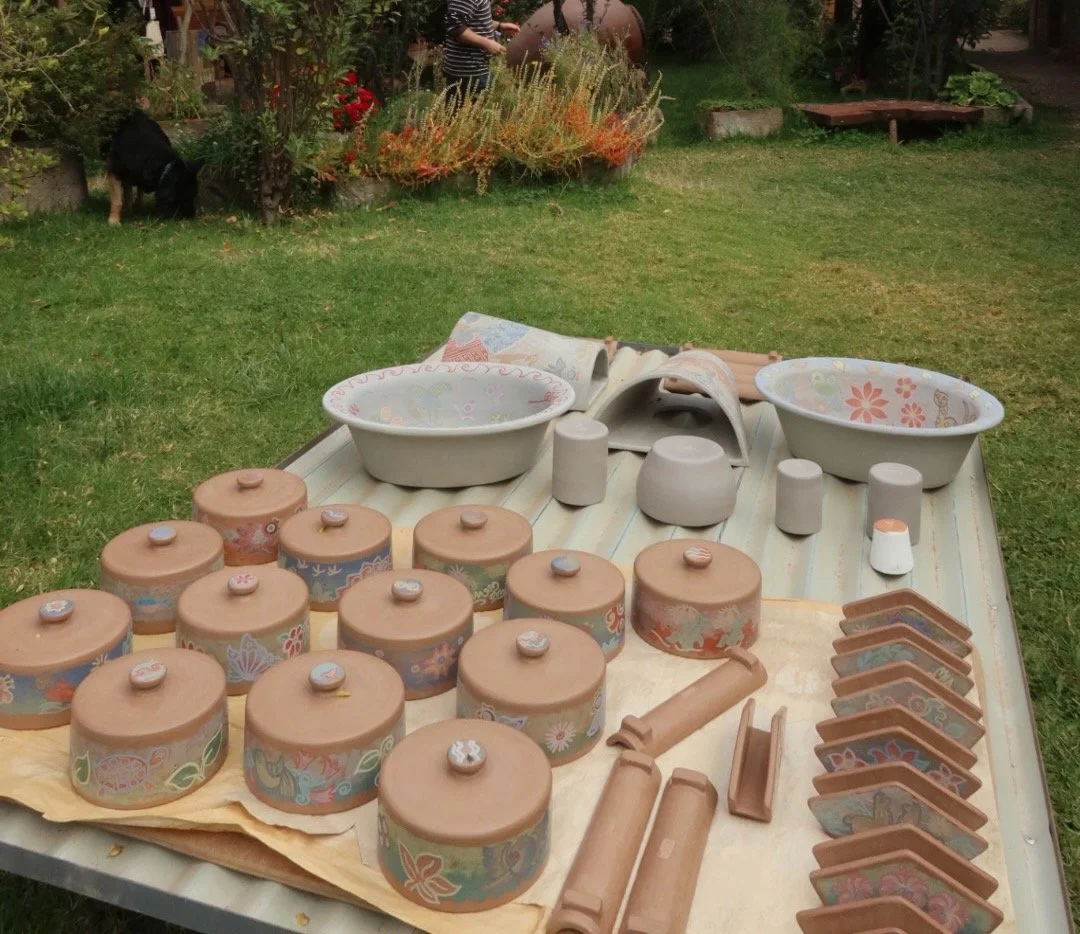
We saw this exact harmony at Cerámicas Seminario. The studio’s art is deeply anchored in ancient Peruvian pottery techniques. But instead of leaving that heritage frozen in time, they actively evolve it. By integrating modern tools like scanners, advanced design software, and 3D printing with alternative materials, they use cutting-edge technology to scale, prototype, and re-imagine traditional structures. They prove that honoring the past doesn't limit your innovation; it gives you a stronger baseline to experiment from.
These experiences highlighted a vulnerability in modern corporate and creative spheres. Valuable wisdom is lost when we don't think about intentionally preserving it. Whether managing a local community or running a high-stakes product design lab, we have to ask ourselves: How are we bridging the gap between legacy expertise and emerging methodologies? How can we intentionally pass down knowledge so that the next generation doesn't have to keep reinventing the wheel from scratch?
When we fail to build deliberate, active pathways that connect experienced generations' knowledge with the fresh perspectives of the newer ones, our entire industry becomes fragile. True innovation requires a continuous, multi-directional transfer of knowledge.
At Design Seedling, we are reflecting on how we structure our internal frameworks to ensure legacy insights aren't lost in the shuffle. Innovation isn't always about searching for an entirely new idea; it's about learning from what has already happened so we can move forward with confidence.