
Founding Project
01. Foundational Research & Tool Stack Evaluation
Competitive Analysis:Audited university design labs and consulting models to identify gaps in experiential education models.
Cohort Tool Stack Research:Researched, evaluated, and curated a standard toolkit to equip future student teams during client sprints.
Key Insight:Traditional models either rely on uncompensated student labor or lack senior oversight. Design Seedling bridges this gap by pairing paid student execution with expert mentor guardrails to guarantee client quality.
02. Round 1 Interviews: Concept Validation
Focus: Tested the foundational value proposition across general non-UX participants to verify concept clarity and market demand.
Key Insight: Confirmed strong mutual interest: businesses seek cost-effective design support, while students seek mentored, real-world portfolio experience.
03. Round 2 Interviews: Co-Designing Operational Mechanics
Conducted deep-dive qualitative syncs with university design students, corporate designers, and academic faculty.
Key Insights:
Sprint Structure: Established a 6-to-8 week sprint minimum to accommodate onboarding while maintaining delivery velocity.
Quality Framework: Implemented a 3-level critique model evaluating Usability, Visual Craft, and Usefulness (solving the right business problem).
Compensation & Mentorship: Validated hourly wages to ensure student accountability, with mentors mediating technical developer constraints.
Participant Quotes:
"That translation of observation into insights is super important... human insight is going to be even more important as we begin to let AI design a screen for us."
"You want to show your structure in such a way where your customer... walks away with something that moves the needle for them."
"The most valuable thing you don't learn in school is communication... talking to various teams and stakeholders."
04. Website Ideation, Sketching & UI Prototyping
Synthesized qualitative insights into user interface directives, user flows, and website architecture.
Early Sketches & Information Architecture:
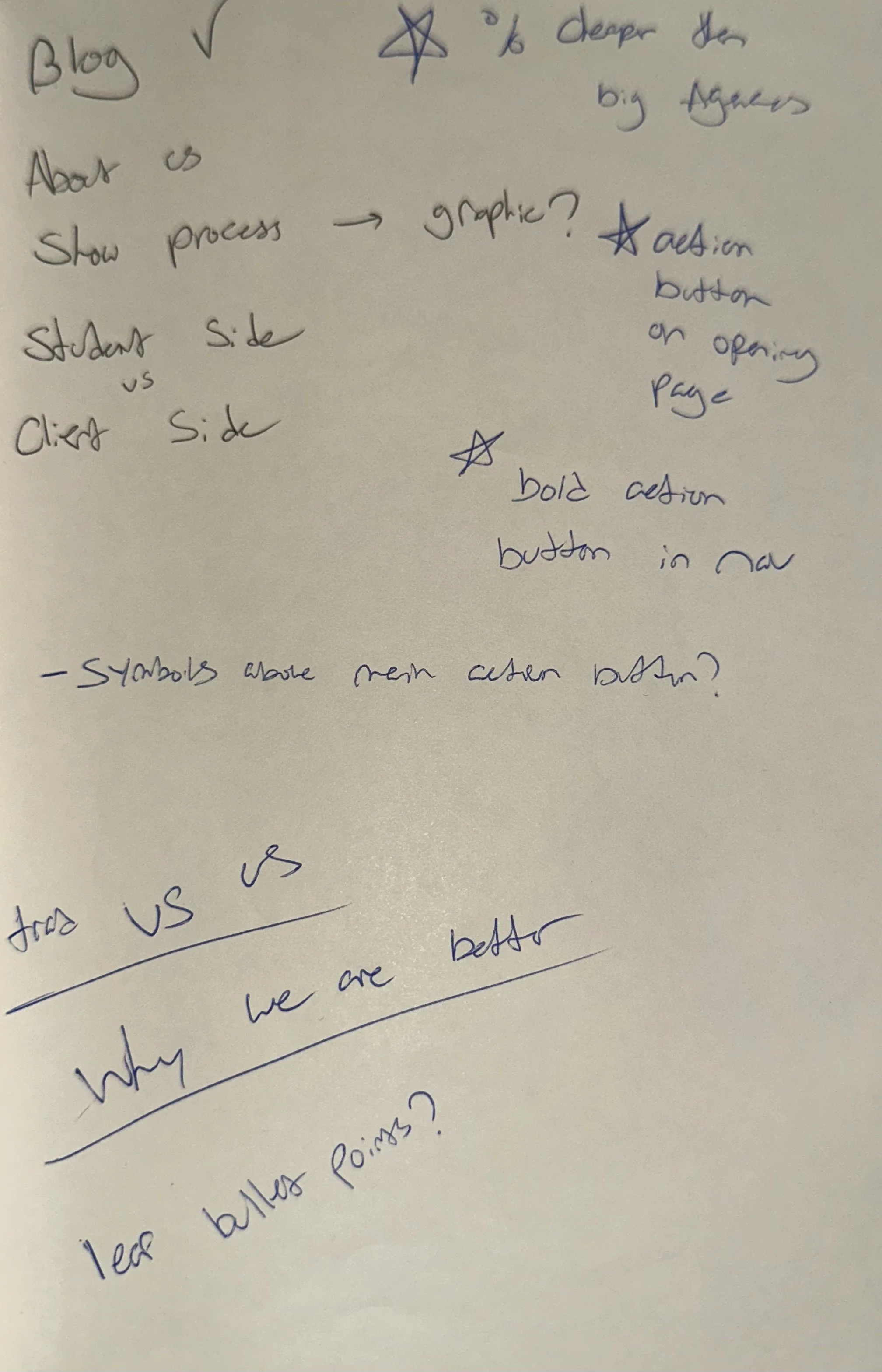
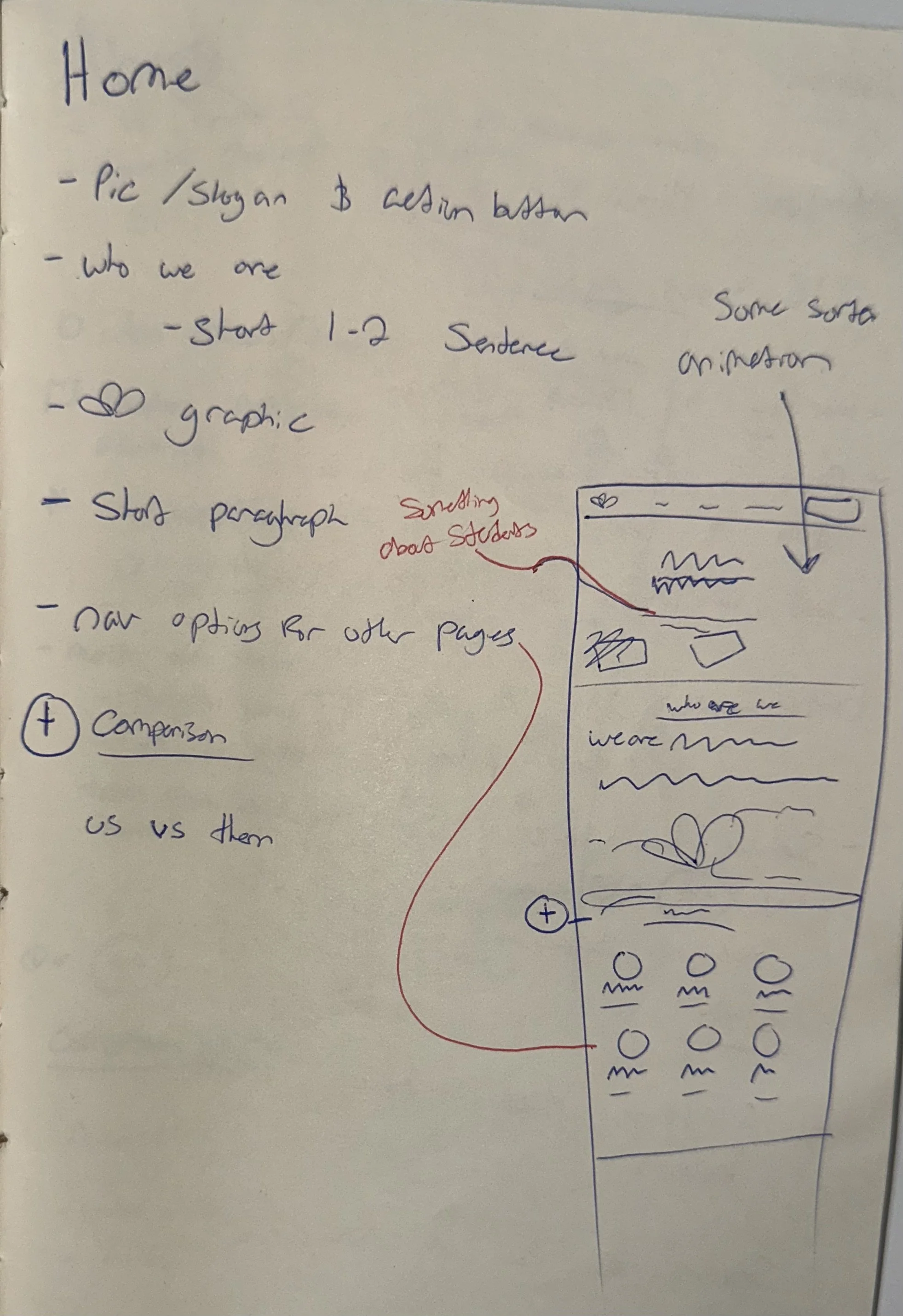
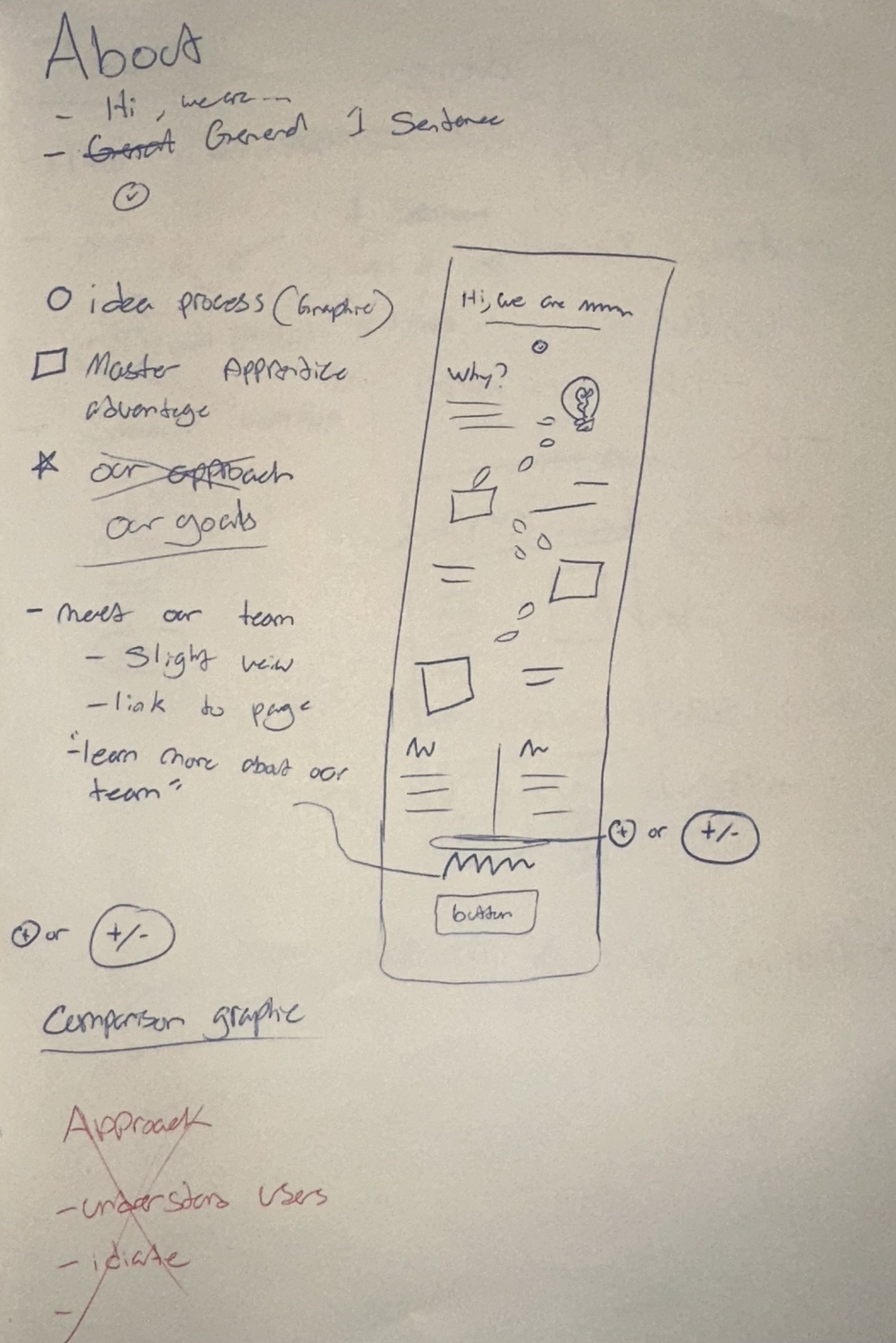
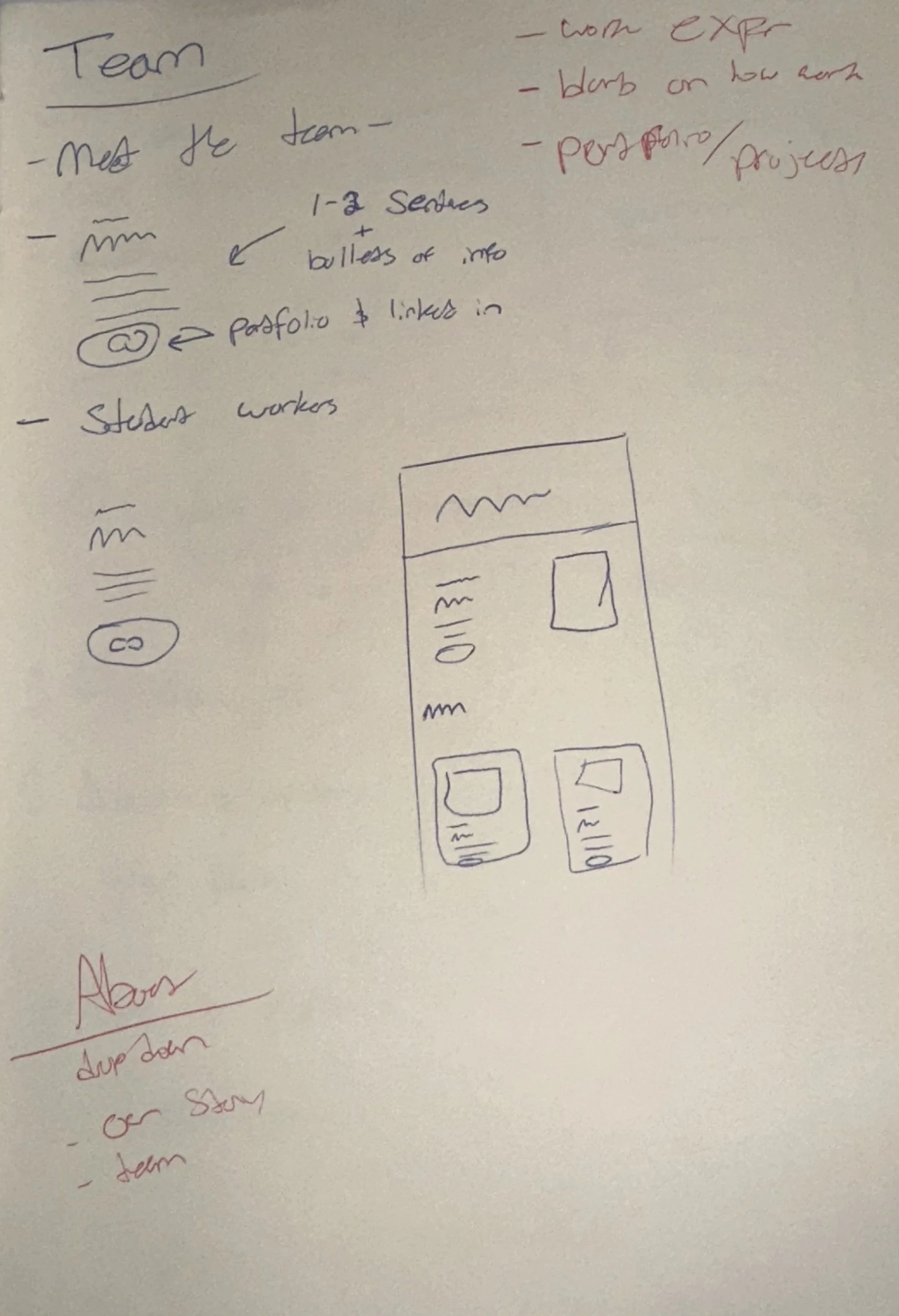
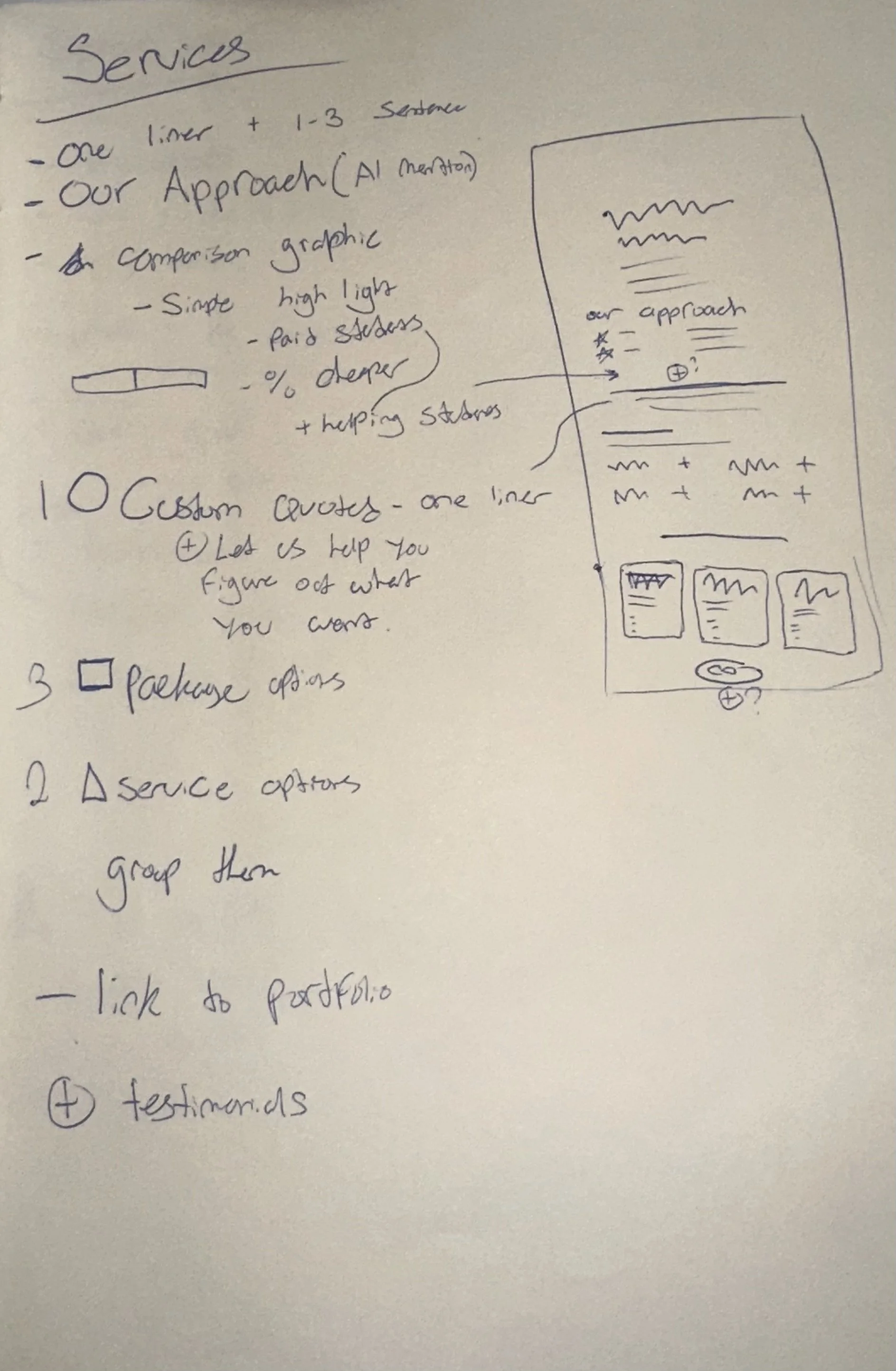
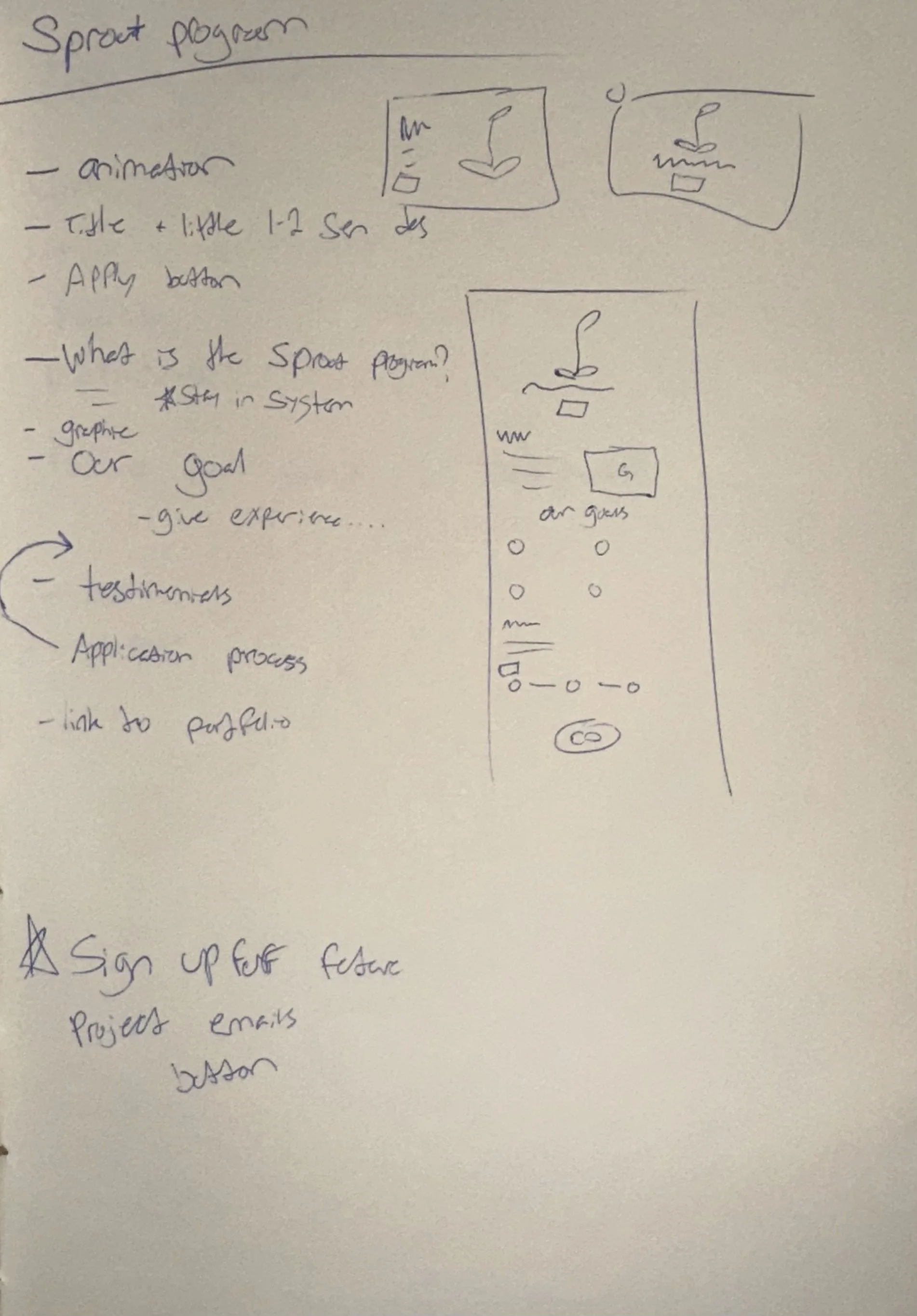
Heuristic Audits & UI Design:Applied heuristic evaluation principles to build out clear service breakdowns and build dedicated student/mentor profiles on the platform.
Key Insight: The web platform serves as a dual-sided narrative hub—building immediate client trust while offering student applicants full transparency regarding program expectations.
05. Round 3 Interviews: Network & Ecosystem Mapping
Engaged academic leads and community directors to map distribution, university recruitment, and partnership channels.
Key Insights:
Mission Governance: Program credibility requires prioritizing student professional development over offering low-cost labor.
Warm Distribution: Focus outreach on university faculty, student leadership councils, and professional communities like Product Hive rather than cold calling.
Participant Quote:
"The program must prioritize the students' professional development over providing inexpensive labor for companies... clearly explain who owns and operates the organization."
Quality Control & Client Delivery
Under Lead Mentor’s oversight, Design Seedling enforces rigorous quality standards across every engagement. Student deliverables undergo mandatory mentor sign-offs prior to handoff, ensuring enterprise-grade outputs, NDA compliance via blinded portfolio case studies, and clear return on investment for client partners.